Let's Connect
Contact Now
Have a project, idea, or technical challenge?
Our team is ready to listen and support you.
- Fast Response
- Expert Consultation
- Long-term Partnership


Have a project, idea, or technical challenge?
Our team is ready to listen and support you.
In today's digital business environment, customers can contact businesses through websites, social media platforms, and messaging applications at any time. Responding promptly, maintaining consistent service quality, and handling large volumes of inquiries simultaneously have become significant challenges for many customer service teams.
To address these challenges, many businesses are adopting chatbot software to automate common interactions, provide information, and reduce repetitive workloads. So, what is a chatbot, how does it work, and how can it be applied to customer service?
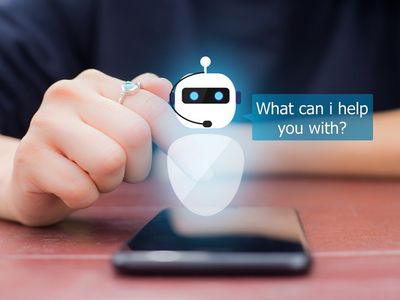
A chatbot is a software application designed to simulate human conversations through text or voice. It can interact with customers on websites, mobile applications, or messaging platforms, depending on the system being deployed.
Depending on its technology and configuration, a chatbot can respond based on predefined scripts, recognize keywords, or use artificial intelligence (AI) to analyze questions and generate contextually relevant responses.
The key difference lies in how chatbots receive and process requests. Rule-based chatbots are suitable for predictable scenarios, while AI-powered chatbots can handle a wider variety of user expressions. However, response quality still depends on the underlying technology, data quality, configuration, and scope of tasks assigned to the system.
In customer service operations, chatbots do more than simply respond to messages. They also help businesses organize their request-handling processes and improve operational efficiency.
Questions about product prices, warranty policies, delivery times, payment methods, and business hours often account for a significant proportion of customer service inquiries.
Businesses can configure chatbots to provide answers to these questions without requiring employees to respond manually to every individual request. With AI-powered chatbots trained on relevant data, customers can ask questions in different ways and still receive appropriate information.
Chatbots can introduce product features, provide service information, and guide customers through available options based on their initial needs.
For example, customers visiting a technology company's website may ask about software features, target users, or registration procedures. Chatbots can answer questions based on configured information and forward more complex inquiries to the relevant employees when necessary.
After making a purchase, customers may need to check order statuses, learn about return policies, or request technical assistance. When integrated with relevant business systems and data sources, chatbots can collect information, guide customers through the appropriate handling steps, or retrieve order statuses within their authorized access permissions.
This helps businesses standardize the initial request-handling process and makes it easier for customers to find appropriate solutions.
Today's customers can contact businesses through multiple platforms. When information is scattered across different channels, businesses may struggle to track interaction histories and maintain a consistent customer experience.
Chatbot software can be deployed across websites, Facebook Messenger, Zalo, and other supported communication channels. When connected to appropriate management tools, businesses can better monitor conversations and centralize customer interaction data.
Chatbots can ask initial questions to collect customer needs, contact details, or information about the issues they are experiencing. The collected data helps businesses categorize requests and direct them to the appropriate departments.
For example, customers interested in receiving a quotation can be guided to provide basic information before a sales representative continues the consultation. This approach reduces the time spent on initial exchanges and supports coordination between departments.
Implementing chatbots can deliver several benefits when businesses select the right solution and design it to fit their operational processes.
Faster Response Times: Chatbots can handle common questions as soon as customers submit their inquiries, including outside business hours when the system is configured for continuous operation.
Reduced Repetitive Workloads: Employees no longer need to manually answer every question with similar content, allowing them to focus more on complex customer issues.
Consistent Information Delivery: Preconfigured and controlled responses help minimize inconsistencies in the information provided across different customer interactions.
Scalable Customer Support: Chatbots can handle multiple conversations simultaneously within the system's capacity, helping businesses manage increasing volumes of customer inquiries.
Improved Customer Interaction Data Management: When integrated with relevant systems, conversation histories and customer information can be used to improve customer support processes.
However, chatbots cannot completely replace human customer service representatives in every situation. Issues requiring professional judgment, complex complaint resolution, or the handling of sensitive information still require appropriate control procedures and human involvement.
To use chatbots effectively, businesses should define clear objectives rather than adopting the technology simply because it is becoming a trend.
First, identify the issues that need to be addressed, such as a high volume of repetitive questions, prolonged response times, or customer inquiries scattered across multiple channels. Based on these needs, businesses can select the appropriate chatbot technology and functional scope.
Next, businesses need to prepare high-quality data, including product information, policies, frequently asked questions, and customer support procedures. This information should be updated regularly to minimize inaccurate or outdated responses.
In addition, businesses should establish a handover mechanism that allows chatbot conversations to be transferred to human employees whenever the chatbot lacks sufficient information or cannot resolve a request. Other important considerations include access permissions, customer data protection, and integration capability with existing business systems.
After deployment, businesses should monitor indicators such as response times, request resolution rates, customer satisfaction levels, and the proportion of conversations transferred to human agents. These metrics provide a basis for refining chatbot scripts, updating its knowledge base, and improving service quality.
For businesses looking to expand their customer support capabilities through artificial intelligence, emTeller.AI by VSII is an AI chatbot solution worth considering.
The solution enables businesses to build chatbots based on their own data and knowledge base, supporting customer interactions and delivering information according to configured content. The system also supports deployment across channels such as websites, Facebook Messenger, and Zalo, depending on the integration setup.
The implementation process can begin with providing training data, customizing the chatbot interface to match the company's brand identity, and then integrating the chatbot into suitable communication channels. Before officially launching the system, businesses should define its operational scope, test response accuracy, and establish mechanisms for human-assisted support.
Rather than expecting a chatbot to handle every situation independently, businesses should start with clearly defined needs and processes, evaluate actual performance, and gradually expand its applications.
Contact VSII to learn more about emTeller.AI and explore AI chatbot implementation options tailored to your business's customer service needs.
A chatbot is a tool that helps businesses automate part of their customer interaction activities, from answering frequently asked questions to handling requests and supporting omnichannel customer service. Successful implementation depends on clear objectives, data quality, integration capabilities, and effective coordination between chatbots and human employees.
By selecting the right solution and continuously measuring performance, businesses can gradually improve service quality and optimize their customer service processes.
 Fast Response